
Flanges for data center projects in Silicon Valley
Silicon Valley's data centers are older and tightly packed, and refitting them for liquid cooling brings stainless CDU and technology cooling loops into existing buildings. Here is what the mild climate and the refits mean for the flanges.
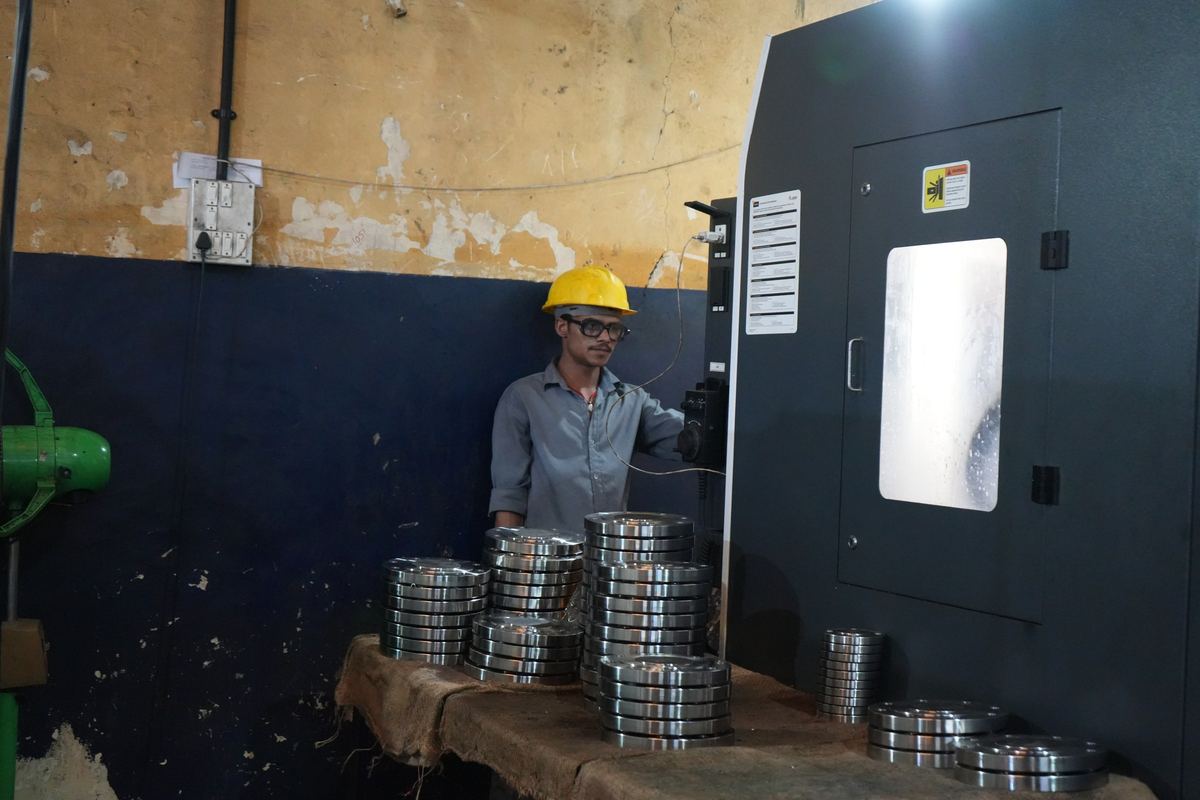
For Silicon Valley data centers we supply 316L stainless flanges, pickled and passivated, for the CDU and technology cooling loops of liquid cooling refits, lap joint flanges with stub ends for tight spaces, and A105 flanges to ASME B16.5 Class 150 for chilled and condenser water. Shipments come in through the Port of Oakland, then by truck to Santa Clara or San Jose.
The Silicon Valley data center market
Silicon Valley had 509.2 MW of colocation inventory in the first half of 2026, with 21.2 MW available. CBRE describes it as supply-constrained, and asking rates for deployments of 10 MW and more were unchanged on the year (CBRE). Santa Clara holds the largest cluster, served by its city-owned utility, Silicon Valley Power.
With little land for new campuses, a good share of the work happens inside existing buildings: adding CDUs, row manifolds and stainless technology cooling loops to halls built for air. Refit piping is cut to fit what is there, which is where flanged spool breaks and lap joint flanges, which turn freely for bolt-hole alignment, earn their place.
Climate and what it means for the piping
| Measure | Value |
|---|---|
| Hottest day in a typical year | 99.8 °F (38 °C) |
| Coldest night in a typical year | 30.7 °F (-1 °C) |
| Average July high | 80.8 °F (27 °C) |
| Average January low | 41.8 °F (5 °C) |
| Record high and low | 109 °F (43 °C) and 18 °F (-8 °C) |
The climate is mild: about 81 °F on an average July afternoon, about 42 °F on an average January night, and a coldest night of about 31 °F in a typical year. That gives long hours of economizer and warm-water cooling, and freezing is rare enough that A105 needs no second thought outdoors. The hottest day of a typical year still reaches about 100 °F, so heat rejection is sized for it.
California's building code adds seismic design, which shapes pipe supports, bracing and flexible connections at equipment more than the flange specification itself.
Flange specification for Silicon Valley projects
| System | Flange | Note |
|---|---|---|
| CDUs and technology cooling system | 316L, Class 150, weld neck or lap joint with stub end, pickled and passivated, 100% PMI | Lap joints ease alignment in refits |
| Chilled water and facility water | A105, Class 150 RF, weld neck or slip-on | Flanged spool breaks at new tie-ins |
| Cooling towers and condenser water | A105, Class 150; flat face at cast iron and FRP | Full face gaskets at flat faces |
| Tie-ins to existing systems | Match the existing flange standard, class and face | Send a photo or drawing of the mating flange |
Every flange is stamped with its grade, size, class and lot number and ships with a mill test report. Send us your line list and we quote each line as specified.
Getting flanges to Silicon Valley
The Port of Oakland, on the east side of San Francisco Bay, is the gateway for Silicon Valley. Containers go by truck to Santa Clara, San Jose and the neighboring cities.
We have no US office or warehouse: every order ships by sea from our works in Gujarat, India. Documents, origin marking, packing and US customs are covered in ordering flanges from India for a US project.
Frequently asked questions
Why lap joint flanges for refits?
The flange turns freely on its stub end, so bolt holes line up with existing equipment without twisting the spool, and only the stub end touches the coolant. See lap joint flanges and stub ends.
Do seismic rules change the flange?
Not the flange specification. Seismic design governs supports, bracing and flexible connections; flanges stay ASME B16.5 Class 150 or whatever your specification requires.
Can you match an existing flange?
Send the standard and class if you know them, or a photo with the outside diameter, bolt circle, number of bolts and hole size, and we will identify it.
Sources
- CBRE, North America Data Center Trends H1 2026 (27 August 2026)
- NOAA 1991 to 2020 climate normals for San Jose International Airport, as tabulated in Wikipedia's climate table