
Flanges for data center projects in Phoenix
Phoenix is where water-saving data center cooling is being proven: more than 100 days a year above 100 °F, about seven inches of rain, and operators moving to closed loops. Here is what that means for the piping and its flanges.
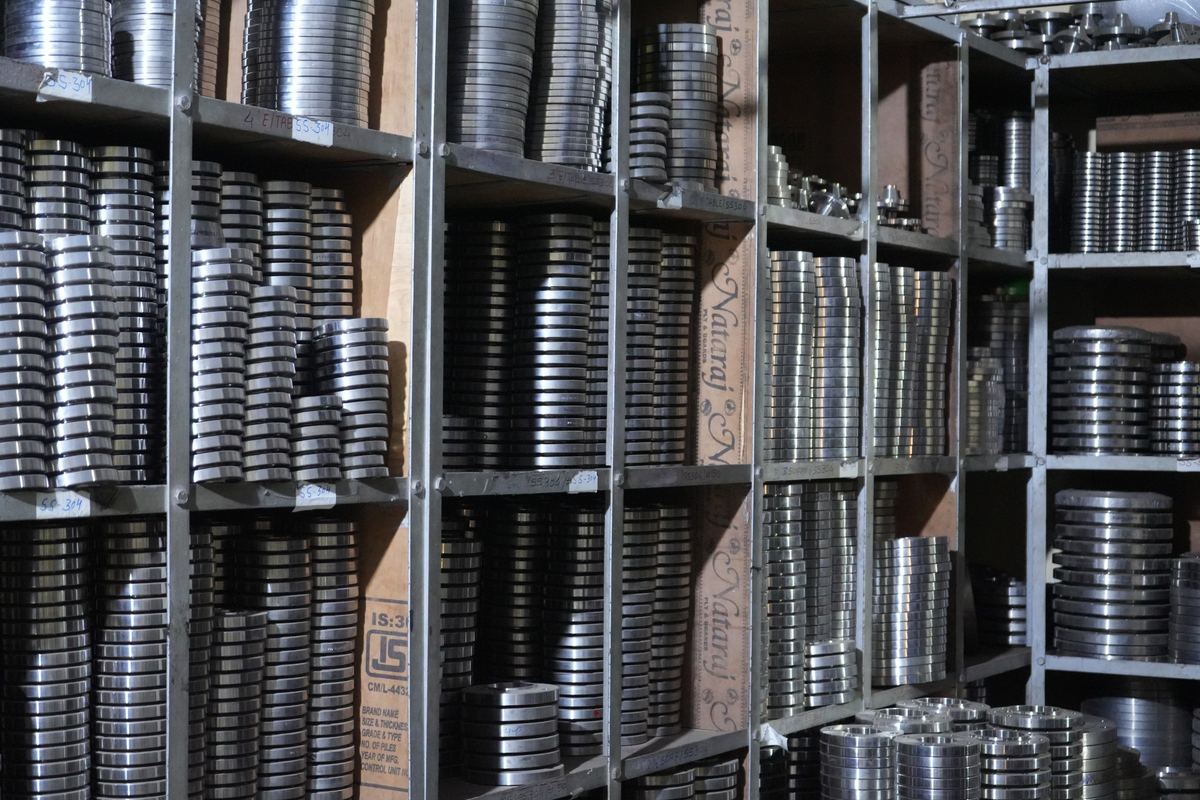
For Phoenix data centers we supply A105 carbon steel and 316L stainless flanges to ASME B16.5 Class 150 for the closed loops that desert sites rely on: chilled and facility water, dry cooler and air-cooled chiller circuits, and the stainless CDU and technology cooling loops of liquid-cooled halls. Shipments come in through the ports of Los Angeles and Long Beach and reach the Valley by truck or rail.
The Phoenix data center market
Phoenix had 1,069.2 MW of colocation inventory in the first half of 2026, with 12.1 MW available (CBRE). Campuses cluster in the East Valley around Chandler and Mesa and in the West Valley around Goodyear.
Water shapes the designs. Microsoft, for example, announced in December 2024 that its new data center designs use chip-level cooling and closed loops that do not evaporate water for cooling, with pilots in Phoenix and Mt. Pleasant, Wisconsin, in 2026 (Microsoft). Closed loops move the heat through more pumps, heat exchangers, dry coolers and air-cooled chillers, and every one of them has flanged connections.
Climate and what it means for the piping
| Measure | Value |
|---|---|
| Hottest day in a typical year | 115.7 °F (47 °C) |
| Coldest night in a typical year | 33.8 °F (1 °C) |
| Average July high | 106.5 °F (41 °C) |
| Average January low | 46 °F (8 °C) |
| Record high and low | 122 °F (50 °C) and 16 °F (-9 °C) |
The numbers are extreme: on average 111 days a year reach 100 °F and 21 reach 110 °F at Sky Harbor, and the hottest day of a typical year is about 116 °F. Rooftop piping in direct sun runs hotter than the air. The flange class still holds: ASME B16.5 rates an A105 Class 150 flange at 260 psi at 200 °F and a 316L Class 150 flange at 195 psi, well above chilled or facility water pressures. The gasket is the part to check, for temperature and for any glycol in the loop.
Freezing is rare: the coldest night of a typical year is about 34 °F and the record low is 16 °F, so standard A105 is right for outdoor carbon steel. With only about 7 inches of rain a year, water-saving designs that avoid evaporation are spreading, and they put more of the heat on closed glycol and technology cooling loops.
Flange specification for Phoenix projects
| System | Flange | Note |
|---|---|---|
| Chilled water and facility water | A105, Class 150 RF, weld neck or slip-on; ASME B16.47 above NPS 24 | Rated 260 psi at 200 °F |
| Dry coolers and air-cooled chillers | A105, Class 150, with gaskets rated for the loop temperature and fluid | Flat face at cast iron pump casings |
| Cooling towers, where used | A105, Class 150; flat face at FRP and cast iron; AWWA C207 on large mains | Water treatment sets the materials |
| CDUs and technology cooling system | 316L, Class 150, weld neck or lap joint with stub end, pickled and passivated, 100% PMI | Same grade as the pipe; no slip-ons on the TCS |
Every flange is stamped with its grade, size, class and lot number and ships with a mill test report. Send us your line list and we quote each line as specified.
Getting flanges to Phoenix
The ports of Los Angeles and Long Beach, side by side on San Pedro Bay, are the main gateway for the Phoenix area. Containers continue east by truck on I-10 or by rail to intermodal terminals in the Valley.
We have no US office or warehouse: every order ships by sea from our works in Gujarat, India. Documents, origin marking, packing and US customs are covered in ordering flanges from India for a US project.
Frequently asked questions
Does desert heat change the flange class?
No. ASME B16.5 rates A105 Class 150 at 260 psi at 200 °F and 316L at 195 psi, far above typical chilled and facility water pressures. Choose gaskets for the temperature.
Do Phoenix projects need low-temperature steel?
No. The coldest night of a typical year is about 34 °F and the record low is 16 °F, well inside the -20 °F lower limit of the ASME B16.5 rating for A105.
Why does water-free cooling mean more stainless?
Heat that is not evaporated in a tower travels further through closed loops. Direct-to-chip halls add stainless technology cooling loops between the CDUs and the racks, and those loops call for 316L or 304L flanges, pickled and passivated. See flanges for the technology cooling system.
Sources
- CBRE, North America Data Center Trends H1 2026 (27 August 2026)
- Microsoft, Sustainable by design: next-generation datacenters consume zero water for cooling (9 December 2024)
- NOAA 1991 to 2020 climate normals for Phoenix Sky Harbor International Airport, as tabulated in Wikipedia's climate table
- ASME B16.5, Pipe Flanges and Flanged Fittings: pressure-temperature ratings