
Flanges for data center projects in Reno
Reno's data centers sit in the high desert east of the Sierra Nevada, many of them at the Tahoe Reno Industrial Center. Dry air, cold nights and scarce water shape the cooling plant. Here is what that means for the flanges, and how they reach Nevada from India.
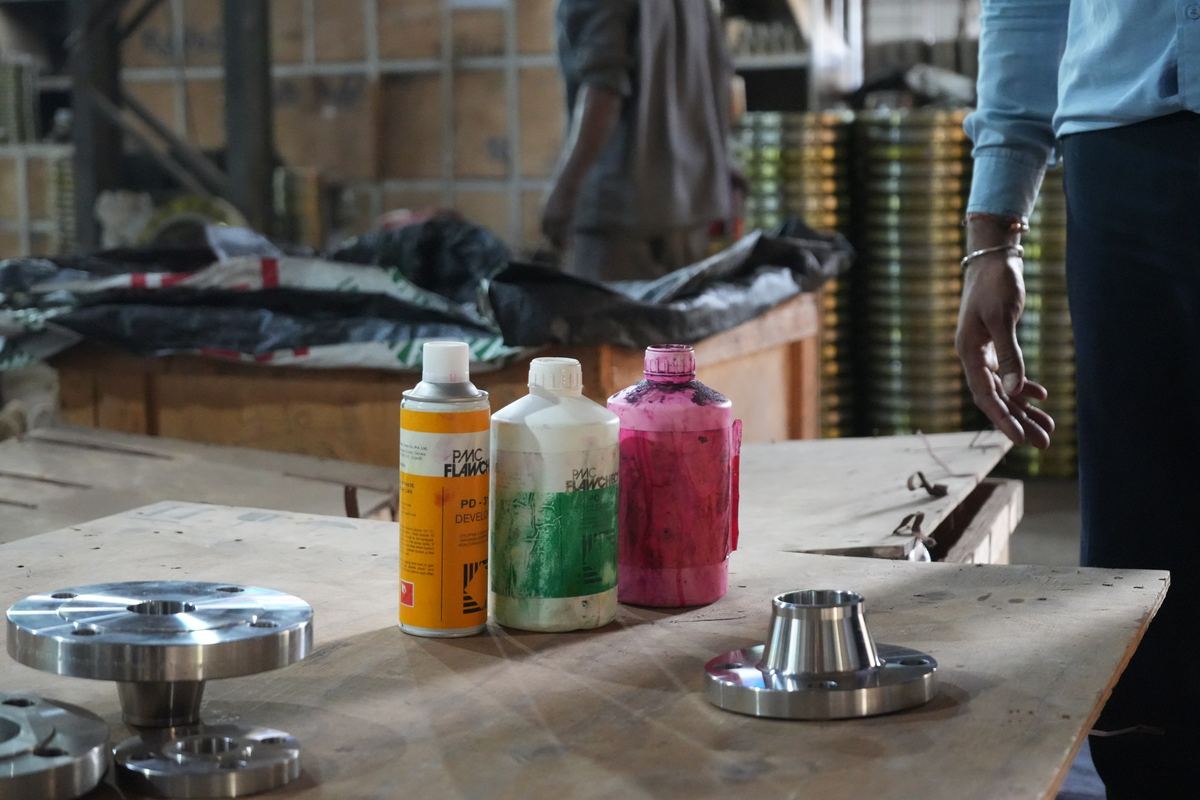
For data centers around Reno we supply A105 flanges to ASME B16.5 Class 150 for chilled water, dry cooler and evaporative cooling loops, and 316L stainless flanges, pickled and passivated, for CDUs and technology cooling loops. Shipments come in through the Port of Oakland and cross the Sierra Nevada by truck on I-80 or by rail.
The Reno data center market
The Tahoe Reno Industrial Center (TRIC), a park of about 107,000 acres east of Reno, hosts some of the largest data center campuses in the West. Switch's Citadel campus is there, and Google bought 1,210 acres in the park in 2017. Nevada's lower costs and its closeness to California are part of the draw (DCD).
Climate and what it means for the piping
| Measure | Value |
|---|---|
| Hottest day in a typical year | 102.6 °F (39 °C) |
| Coldest night in a typical year | 6.6 °F (-14 °C) |
| Average July high | 93.9 °F (34 °C) |
| Average January low | 26.1 °F (-3 °C) |
| Record high and low | 108 °F (42 °C) and -17 °F (-27 °C) |
Reno sits at about 4,400 feet, and its air is dry: average relative humidity is about 51% and falls to about 36% in July, and only about 7 inches of rain fall in a year. Dry air makes evaporative and adiabatic cooling very effective, but water is scarce, so dry coolers with evaporative assist for the hottest days are a common compromise. Thinner air at altitude reduces the capacity of fans and air-cooled equipment; it does not affect flange ratings, which are gauge pressures.
Nights are cold: the coldest night of a typical year is about 7 °F and the record low is -17 °F, so outdoor loops run glycol or are drained in winter. A105 covers that record low within the -20 °F lower limit of its ASME B16.5 rating.
Flange specification for Reno projects
| System | Flange | Note |
|---|---|---|
| Dry coolers and hybrid heat rejection | A105, Class 150 RF, gaskets rated for glycol | Drain and vent connections for winter |
| Chilled water and facility water | A105, Class 150 RF; ASME B16.47 above NPS 24 | Blinds on header ends for later phases |
| Evaporative cooling water | A105, Class 150; flat face at cast iron and FRP equipment | Full face gaskets at flat faces |
| CDUs and technology cooling system | 316L, Class 150, weld neck or lap joint with stub end, pickled and passivated, 100% PMI | Same grade as the pipe; no slip-ons on the TCS |
Every flange is stamped with its grade, size, class and lot number and ships with a mill test report. Send us your line list and we quote each line as specified.
Getting flanges to Reno
The Port of Oakland is the closest major container port to Reno. Containers cross the Sierra Nevada by truck on I-80 or by rail, and TRIC lies along I-80 east of Sparks.
We have no US office or warehouse: every order ships by sea from our works in Gujarat, India. Documents, origin marking, packing and US customs are covered in ordering flanges from India for a US project.
Frequently asked questions
Does Reno's altitude affect flange ratings?
No. ASME B16.5 ratings are gauge pressures, and the drop in atmospheric pressure at 4,400 feet is too small to matter for water loops. Altitude derates fans and air-cooled equipment instead.
Do Reno projects need low-temperature flanges?
Usually not: the record low is -17 °F, within the -20 °F lower limit for A105. Check your specification's minimum design metal temperature for exposed glycol piping.
Can you deliver to TRIC?
Yes. Tell us the delivery address and terms, and we confirm the routing in the quotation.
Sources
- DCD, Google is planning a massive data center in Nevada (18 April 2017)
- NOAA 1991 to 2020 climate normals for Reno-Tahoe International Airport, as tabulated in Wikipedia's climate table
- ASME B16.5, Pipe Flanges and Flanged Fittings: pressure-temperature ratings