
Flanges for data center projects in New York and New Jersey
Data centers in the New York Tri-State area sit in multi-story buildings in Manhattan and on campuses across northern and central New Jersey. Tall buildings bring static head, and tight floors favor flanged spools. Here is what that means for the flanges.
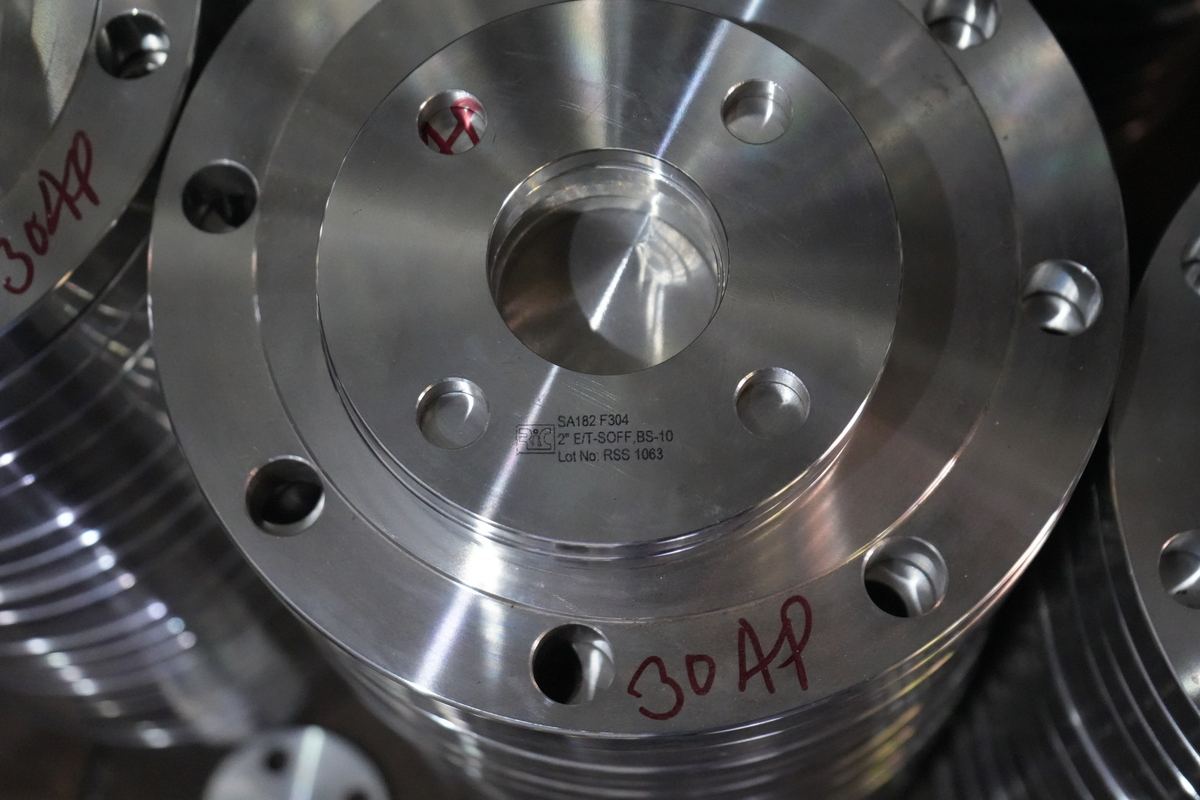
For New York and New Jersey data centers we supply A105 flanges to ASME B16.5 Class 150, and Class 300 where static head in tall buildings calls for it, 316L stainless flanges, pickled and passivated, for CDUs and technology cooling loops, and lap joint flanges for tight refits. Shipments arrive through the Port of New York and New Jersey, a short truck move from most sites.
The New York and New Jersey data center market
The New York Tri-State market had 190.0 MW of colocation inventory in the first half of 2026, with 13.7 MW available, and asking rates for deployments of 10 MW and more rose 19%, the largest increase of any market CBRE tracks (CBRE).
Many facilities are in multi-story buildings. Rooftop heat rejection over many floors puts static head on the lowest flanges, and refits for liquid cooling have to fit between existing structure and services.
Climate and what it means for the piping
| Measure | Value |
|---|---|
| Hottest day in a typical year | 100 °F (38 °C) |
| Coldest night in a typical year | 7 °F (-14 °C) |
| Average July high | 86.9 °F (31 °C) |
| Average January low | 25.5 °F (-4 °C) |
| Record high and low | 108 °F (42 °C) and -14 °F (-26 °C) |
Winters freeze and summers are hot: at Newark the coldest night of a typical year is about 7 °F and the hottest day about 100 °F, with roughly 32 inches of snow a year. Rooftop dry coolers and air-cooled chillers run glycol, so gaskets must suit it. The record low of -14 °F is within the -20 °F lower limit of the ASME B16.5 rating for A105.
Static head in tall buildings
Every 100 feet of water column adds about 43 psi at the bottom. A 400-foot building with rooftop heat rejection puts about 173 psi of static head on its lowest flanges before pump head and surge are added, which can exceed the 230 psi Class 150 rating of 316L. Lower floors then move to Class 300, or the building is split into pressure zones with heat exchangers. Choosing a flange pressure class works through the numbers.
Flange specification for New York and New Jersey projects
| System | Flange | Note |
|---|---|---|
| Lower floors of tall buildings | Class 300 where static head plus pump head and surge approach the Class 150 rating | Or pressure zones with heat exchangers |
| Chilled water and facility water | A105, Class 150 RF, weld neck or slip-on | Flanged spool breaks for refits |
| Rooftop dry coolers and air-cooled chillers | A105, Class 150, gaskets rated for glycol | Drain and vent connections for winter |
| CDUs and technology cooling system | 316L, Class 150 or 300, weld neck or lap joint, pickled and passivated, 100% PMI | Lap joints for tight refits |
Every flange is stamped with its grade, size, class and lot number and ships with a mill test report. Send us your line list and we quote each line as specified.
Getting flanges to New York and New Jersey
The Port of New York and New Jersey, with its main container terminals at Port Newark and Elizabeth, is the largest port on the US East Coast and a short truck move from New Jersey campuses and Manhattan buildings alike.
We have no US office or warehouse: every order ships by sea from our works in Gujarat, India. Documents, origin marking, packing and US customs are covered in ordering flanges from India for a US project.
Frequently asked questions
When do tall buildings need Class 300 flanges?
When static head plus pump shut-off head and surge approach the Class 150 rating at the lowest floors: 285 psi for A105 and 230 psi for 316L at ambient temperature. See the worked example in our pressure class guide.
Can you supply flanges for a refit in a Manhattan building?
Yes. Send the line list with any space limits; lap joint flanges and flanged spool breaks help where pipe has to be fitted around existing structure.
Which port should we use?
The Port of New York and New Jersey is the natural choice for the Tri-State area; your forwarder confirms the routing.
Sources
- CBRE, North America Data Center Trends H1 2026 (27 August 2026)
- NOAA 1991 to 2020 climate normals for Newark Liberty International Airport, as tabulated in Wikipedia's climate table
- ASME B16.5, Pipe Flanges and Flanged Fittings: pressure-temperature ratings