
Flanges for data center projects in Atlanta
Atlanta overtook Northern Virginia in 2026 as the North American market with the most data center capacity under construction. Big campuses mean big mains and long flange schedules. Here is how its hot, humid climate shapes the piping, and how flanges from India reach it.
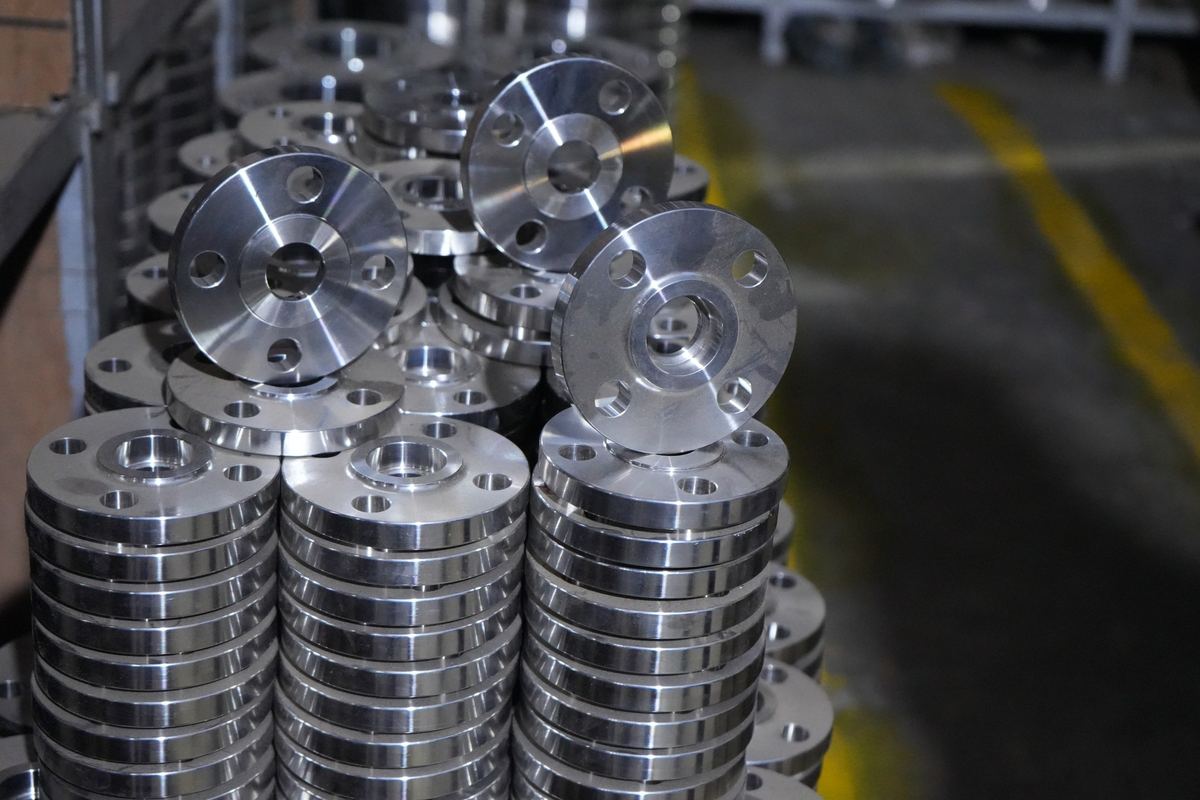
For Atlanta data centers we supply A105 flanges to ASME B16.5 Class 150 for chilled water and condenser water, ASME B16.47 and AWWA C207 flanges for the large mains of hyperscale plants, and 316L stainless flanges, pickled and passivated, for CDUs and technology cooling loops. Shipments come in through the Port of Savannah and reach metro Atlanta by truck or rail.
The Atlanta data center market
Atlanta had 1,803.2 MW of colocation inventory in the first half of 2026 and nearly 2,900 MW under construction, up 52.3% in a year. That made it the most active construction market in North America for the first time, ahead of Northern Virginia, and asking rates for deployments of 10 MW and more rose 14.5% (CBRE).
Construction on that scale can mean chilled water mains of 30 inches and more, long runs of identical weld neck flanges, blinds for later phases and flange schedules that change from phase to phase. That is where large-diameter ASME B16.47 and AWWA C207 flanges come in.
Climate and what it means for the piping
| Measure | Value |
|---|---|
| Hottest day in a typical year | 97.3 °F (36 °C) |
| Coldest night in a typical year | 15.2 °F (-9 °C) |
| Average July high | 90.1 °F (32 °C) |
| Average January low | 35.6 °F (2 °C) |
| Record high and low | 106 °F (41 °C) and -9 °F (-23 °C) |
Atlanta is hot and humid: the hottest day of a typical year reaches about 97 °F, average relative humidity is about 68% and peaks in August, and about 50 inches of rain fall in a year. Where cooling towers are used, condenser water connects to cast iron pumps and FRP towers with flat face flanges and full face gaskets. Humidity also raises the dew point in the white space, so rear-door heat exchangers and technology cooling loops run on controlled supply temperatures above it.
Winters are mild but not frost-free: the coldest night of a typical year is about 15 °F and the record low is -9 °F, both within the -20 °F lower limit of the ASME B16.5 rating for A105. Outdoor loops still need freeze protection, by glycol or drain-down.
Flange specification for Atlanta projects
| System | Flange | Note |
|---|---|---|
| Mains above NPS 24 | ASME B16.47 Series A or B, or AWWA C207 | The valves and equipment set the standard |
| Chilled water and facility water | A105, Class 150 RF, weld neck or slip-on | Blinds on header ends for later phases |
| Cooling towers and condenser water | A105, Class 150; flat face at cast iron pumps and FRP towers | Full face gaskets at flat faces |
| CDUs and technology cooling system | 316L, Class 150, weld neck or lap joint with stub end, pickled and passivated, 100% PMI | Same grade as the pipe; no slip-ons on the TCS |
Every flange is stamped with its grade, size, class and lot number and ships with a mill test report. Send us your line list and we quote each line as specified.
Getting flanges to Atlanta
The Port of Savannah is the main gateway for Georgia. Containers reach metro Atlanta by truck on I-16 and I-75 or by rail. Charleston is another option your forwarder may use.
We have no US office or warehouse: every order ships by sea from our works in Gujarat, India. Documents, origin marking, packing and US customs are covered in ordering flanges from India for a US project.
Frequently asked questions
Can you quote flange schedules for a multi-phase campus?
Yes. Send the schedule by phase; we quote each line with its standard, class and material, and blind flanges for future connections can ship with the first phase.
ASME B16.47 or AWWA C207 for large chilled water mains?
The valves and equipment decide. Above NPS 24, ASME B16.47 covers steel flanges for process and building piping, while AWWA C207 is written for water service. See AWWA vs ASME flanges.
Does humidity change the flange material?
No. Humidity matters for condensation on cold piping and for the dew point at rack-level loops, not for the flange grade. Insulate cold flanges along with the pipe.
Sources
- CBRE, North America Data Center Trends H1 2026 (27 August 2026)
- NOAA 1991 to 2020 climate normals for Hartsfield-Jackson Atlanta International Airport, as tabulated in Wikipedia's climate table
- ASME B16.5, Pipe Flanges and Flanged Fittings: pressure-temperature ratings