
HVAC flanges for chilled water, hot water and district energy
Chillers, cooling towers, boilers, pumps and air handlers all connect to the piping with flanges. Building services piping is low pressure, but the flange choice at each piece of equipment still matters.
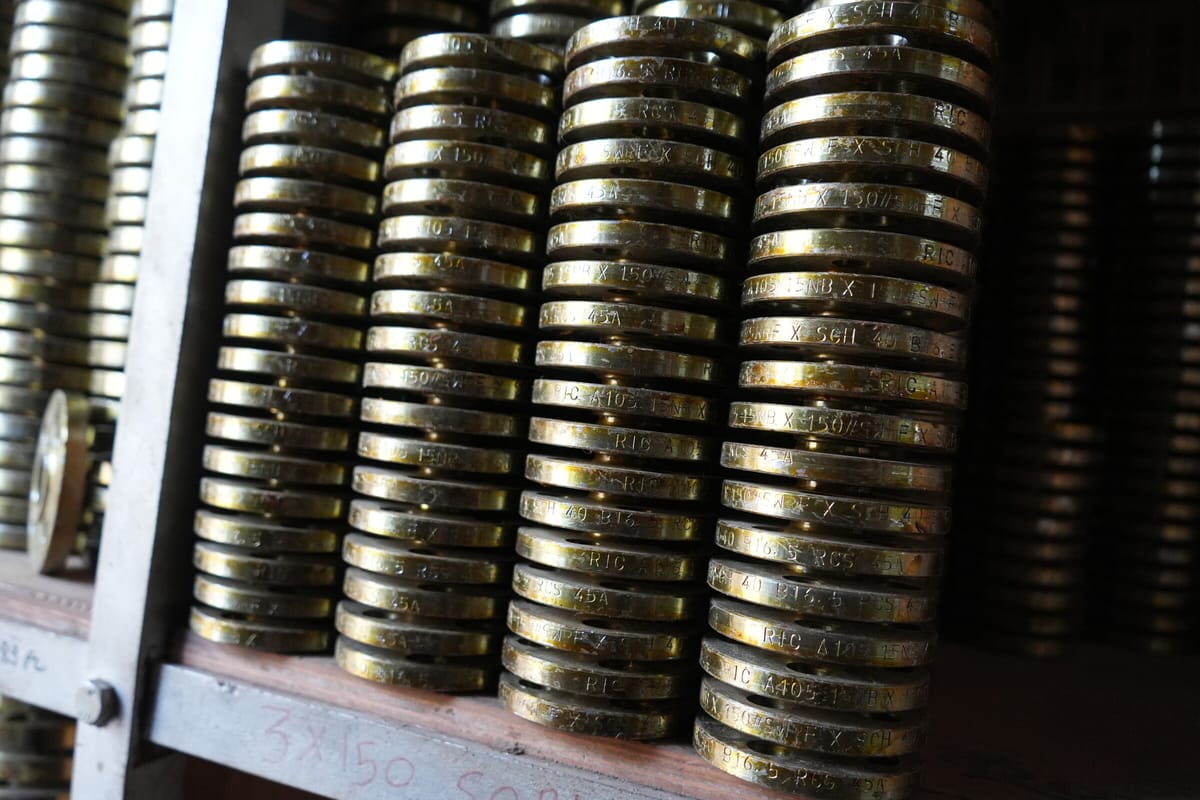
HVAC and district energy piping in the US is built to ASME B31.9 for building services, or ASME B31.1 for central steam and high temperature hot water plants, and almost all of it uses ASME B16.5 Class 150 flanges in A105 carbon steel: weld neck or slip-on raised face on steel valves and fittings, flat face at cast iron pumps, chillers and valves, and ASME B16.47 or AWWA flanges on mains above NPS 24. We supply all of these, each heat with a mill test report, and the same flanges go into the data center cooling plants covered on this site.
Where flanges are used in hvac and district energy
| System | Flange | Class and material |
|---|---|---|
| Chilled water | Weld neck or slip-on RF; flat face at chiller and pump nozzles | Class 150, A105 |
| Condenser water and cooling towers | Slip-on and weld neck RF; flat face at cast iron | Class 150, A105 |
| Heating hot water | Weld neck or slip-on RF | Class 150, A105 |
| Steam and high temperature hot water | Weld neck RF | Class 300, A105 |
| District energy mains above NPS 24 | ASME B16.47 or AWWA C207 | Class 150 or AWWA class |
Building services piping: ASME B31.9
ASME B31.9 covers building services piping within set limits of pressure, temperature and size, and accepts ASME B16.5 flanges. Most chilled and condenser water systems run well under the 285 psig that a Class 150 A105 flange is rated for at 100 °F, so Class 150 is the default; tall buildings and pumped high-rise zones are the exception and may need Class 300 at the lower floors. Our ASME B31.9 guide and class selection guide work through both.
Flat face at the equipment
Many chillers, pumps, strainers and butterfly valves in HVAC plants have cast iron or ductile iron flat face flanges. Mate them with a flat face steel flange and a full-face gasket; a raised face flange can crack a cast iron flange when the bolts are tightened. See flat face vs raised face.
Slip-on or weld neck
Slip-on flanges are cheaper to buy and easier to align, and they are common on Class 150 water piping. Weld neck flanges cost more but carry bending loads and vibration better, so they go on pump discharges, chiller nozzles and anywhere a specification asks for butt welds throughout. See slip-on flanges and weld neck flanges.
Ordering for a US project
Send your line list with the standard, type, size, class, bore or schedule, facing, material and quantity for each line, and we quote every line as specified. Every order ships from our works in Gujarat, India; we have no US office or warehouse. Each line is supplied to your line list, and ordering from India explains the documents, marking, packing and customs.
Frequently asked questions
What flange class is used for chilled water?
Class 150 to ASME B16.5 in almost all buildings. Check the static head plus pump head at the lowest point of tall buildings, which can call for Class 300.
Do you supply flat face flanges?
Yes, in A105 and stainless, drilled to ASME B16.5 Class 150 for cast iron and ductile iron equipment.
Are HVAC flanges and data center cooling flanges the same?
For the facility water side, yes: chilled and condenser water use the same Class 150 A105 flanges. The technology cooling loops of liquid-cooled data centers add stainless flanges with extra cleanliness requirements, covered on our data center pages.
Sources
- ASME B31.9, Building Services Piping
- ASME B31.1, Power Piping
- ASME B16.5, Pipe Flanges and Flanged Fittings, NPS 1/2 through NPS 24
- ASME B16.47, Large Diameter Steel Flanges, NPS 26 through NPS 60