
Flange gaskets for data center water and glycol loops
A flange joint is only as good as its gasket. On data center water loops the choice comes down to three soft materials, the right shape for the flange face, and a gasket that is clean enough for the loop it sits in.
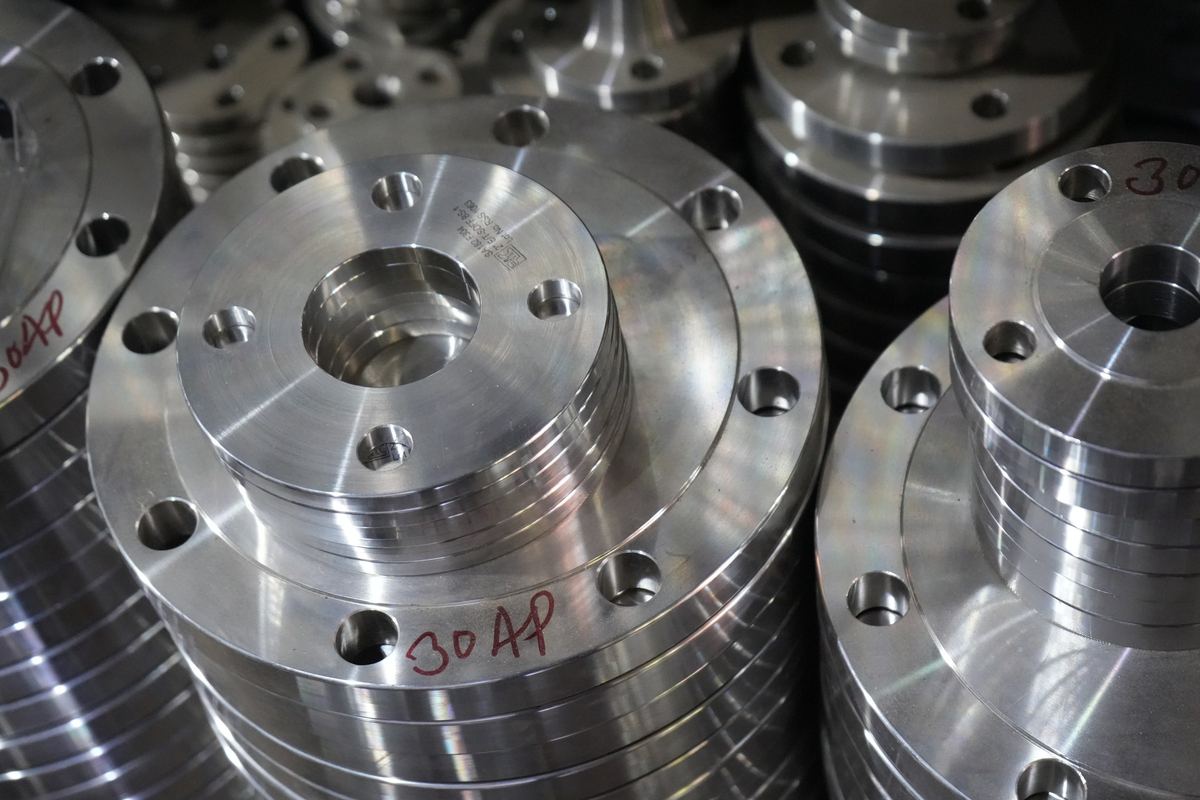
For data center water and glycol loops, use EPDM or PTFE gaskets on the technology cooling system and EPDM, PTFE or CNAF on facility and chilled water. Use a full face gasket on flat face flanges and a ring gasket inside the bolt circle on raised face flanges, sized to ASME B16.21 or EN 1514-1.
Gasket materials for water and glycol
Data center loops run cool to warm water, sometimes with propylene glycol and corrosion inhibitors. That is gentle service for gaskets, so the soft sheet materials below cover almost every joint.
| Material | What it is | Strengths | Watch for | Typical loops |
|---|---|---|---|---|
| EPDM | Ethylene propylene diene rubber | Very good with water, glycols and inhibitors; flexible, seals at low bolt load | Swells in mineral and synthetic oils; check the temperature rating of the grade | TCS, CDU, facility water, chilled water |
| PTFE | Filled or expanded polytetrafluoroethylene | Chemically inert, clean, suits almost any coolant | Plain PTFE creeps under load; use filled or expanded grades and retorque guidance | TCS, CDU, stainless headers |
| CNAF | Compressed non-asbestos fiber sheet, fibers bound with rubber | Robust, low cost, widely stocked | Grade choice matters for hot water and glycol; fiber-based, so cut edges must be clean | Chilled water, condenser water, facility water |
| Spiral wound | Metal and filler windings to ASME B16.20 | High pressure and temperature | Needs higher bolt load; rarely needed at Class 150 water | Only where the specification calls for it |
On the technology cooling system the gasket is a wetted part, just like the pipe and the cold plates. Use a material on the CDU or cold plate supplier's approved list. Liquid cooling material lists, such as the Open Compute Project's work on wetted materials, typically include EPDM and PTFE.
Full face or ring gasket
The gasket shape follows the flange face, not the pipe.
| Flange face | Gasket | Where it is used |
|---|---|---|
| Flat face (FF) | Full face: covers the whole face, bolt holes cut in | Mating cast iron pumps, chiller water boxes, valves, FRP tower piping |
| Raised face (RF) | Ring gasket inside the bolt circle (IBC), centred by the bolts | Steel to steel joints on mains, headers and skids |
| Lap joint with stub end | Ring gasket on the stub end face | Stainless TCS and CDU headers |
Ring gaskets for ASME B16.5 flanges are dimensioned in ASME B16.21; gaskets for EN 1092-1 PN flanges are dimensioned in EN 1514-1. Order them with the same size and class or PN as the flange, for example "ring gasket, NPS 6, Class 150, 3 mm EPDM".
Do not bolt a raised face flange to a flat face cast iron flange with a ring gasket. The bolts bend the cast iron flange around the raised face and can crack it. Use a flat face steel flange and a full face gasket. Flat face vs raised face explained.
Thickness and face finish
- Thickness: 1/16 in (1.5 mm) and 1/8 in (3 mm) are the common sheet thicknesses. Thinner gaskets resist blowout and creep better; thicker ones forgive small misalignment and uneven faces.
- Raised face finish: ASME B16.5 raised faces are machined with a serrated finish of 3.2 to 6.3 µm Ra (125 to 250 µin). Soft gaskets bite into the serrations, which is why a standard finish suits EPDM, CNAF and PTFE. Tell us if your gasket supplier asks for a different finish.
- Clean faces: keep flange faces covered until assembly. A scratch across the serrations is a leak path.
Bolting the joint
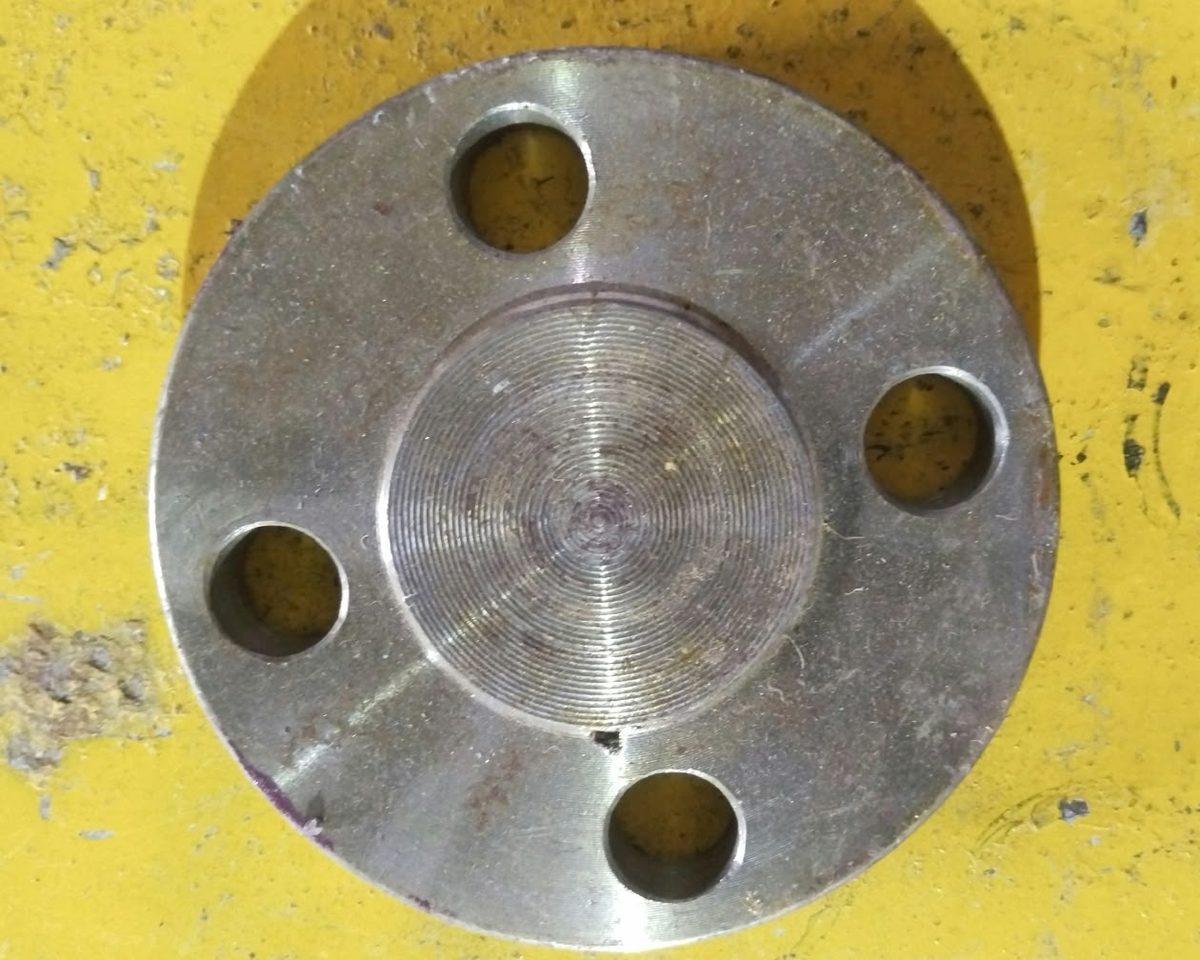
Most flange leaks on water systems come from uneven or wrong bolt load, not from the gasket material. Follow the gasket maker's assembly stress and a cross-pattern tightening sequence such as the one in ASME PCC-1. Use the bolt material your specification names, and lubricate threads and nut faces so the torque turns into clamping force.
- Tighten in steps, in a star pattern, then do a final pass round the circle.
- Do not reuse soft gaskets after a joint has been opened.
- On PTFE gaskets, follow the maker's advice on retightening after the first warm-up.
Gaskets and dissimilar metals
Where a carbon steel facility water main meets a stainless CDU connection, an insulating gasket kit can break the electrical path that drives galvanic corrosion. The kit adds insulating sleeves and washers for each bolt. See isolating dissimilar metal flanges.
What to put on the order
- Material and grade, for example "EPDM, 3 mm" or "expanded PTFE, 1.5 mm".
- Shape: full face or ring (IBC), and the flange standard, size and class or PN.
- The fluid and design temperature, for example "PG25, 45 °C".
- For the TCS, any cleanliness or extractables requirement from the cooling system supplier.
We make the flanges, and you can list matching stud bolts and nuts on the same request. Send your flange schedule.
Frequently asked questions
Which gasket material suits a propylene glycol loop?
EPDM and PTFE both suit water and propylene glycol mixes such as PG25 at data center temperatures. Compressed non-asbestos fiber (CNAF) sheet also works on facility water, but check the grade with the gasket maker for glycol and for your temperature.
Do flat face flanges need a different gasket?
Yes. A flat face flange bolted to cast iron, plastic or fiberglass needs a full face gasket that covers the whole face and has the bolt holes cut in it, so the bolt load spreads evenly and the brittle flange is not bent.
Is a spiral wound gasket needed on Class 150 water piping?
Usually not. Spiral wound gaskets to ASME B16.20 are for higher pressures and temperatures. On Class 150 or PN16 water and glycol loops, soft gaskets such as EPDM, PTFE or CNAF are the normal choice unless the project specification asks for spiral wound.
Can EPDM be used in immersion cooling?
Not on the dielectric fluid side if the fluid is a hydrocarbon oil, because EPDM swells in oils. Use the elastomer the fluid supplier approves, such as FKM or PTFE. EPDM remains fine on the water side of the heat exchanger.
Sources
- ASME B16.5, Pipe Flanges and Flanged Fittings (raised face finish)
- ASME B16.21, Nonmetallic Flat Gaskets for Pipe Flanges; ASME B16.20, Metallic Gaskets for Pipe Flanges
- EN 1514-1, Flanges and their joints: gaskets for PN-designated flanges
- ASME PCC-1, Guidelines for Pressure Boundary Bolted Flange Joint Assembly
- Open Compute Project, cold plate liquid cooling, wetted materials